Audio · Kevin Marr Horikema
Japanese Tattoos with Kevin Marr Horikema
Published March 11, 2025
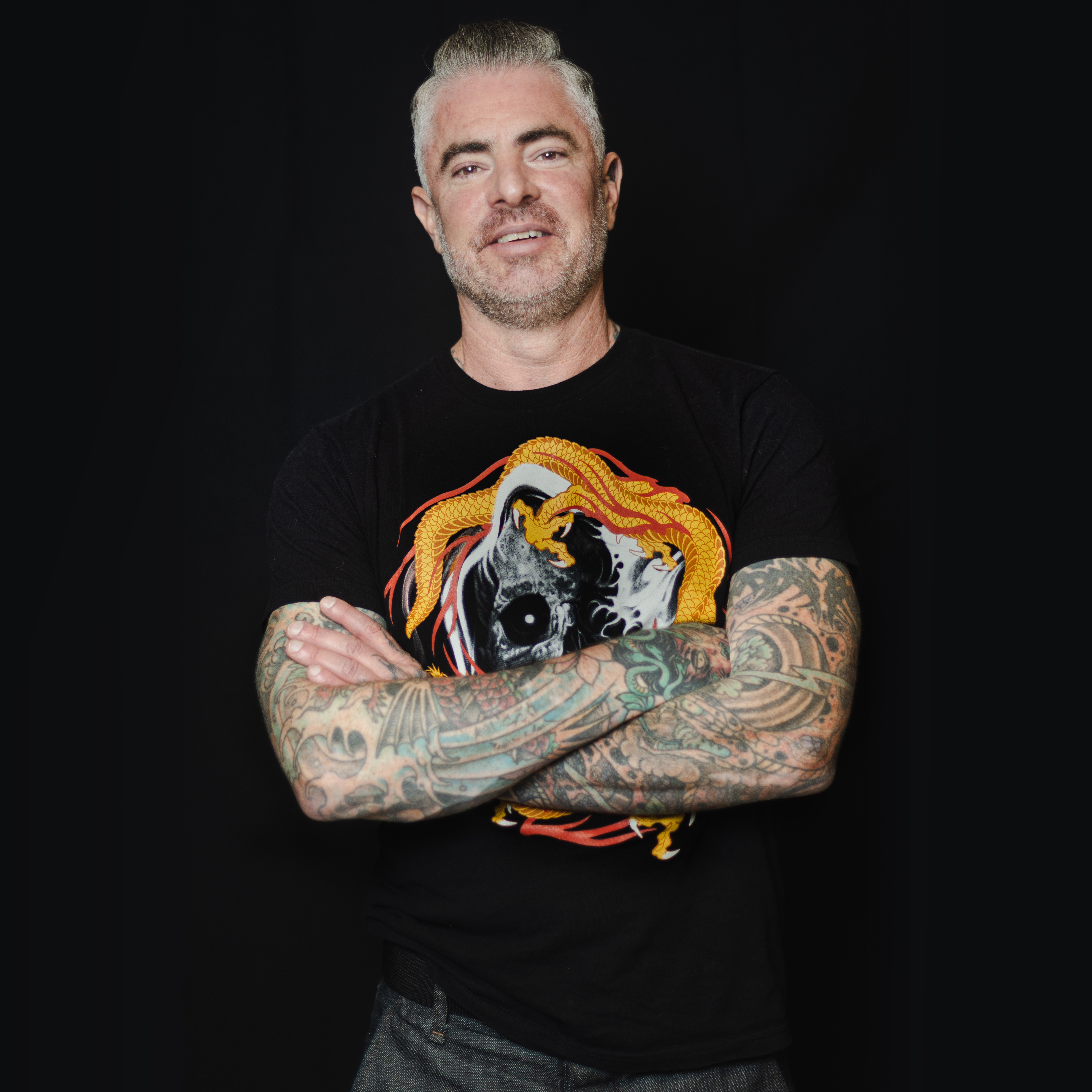
Kevin Marr Horikema, a tattoo artist in San Francisco, specializing in traditional Japanese tattooing, shares his journey into the world of tattooing. From the philosophy behind the art to the patience required for large-scale work, Kevin discusses his approach to tattooing, inspiration, and the evolving landscape of the craft.
Behind the work
Kevin Marr Horikema, a tattoo artist based in San Francisco, specializes in traditional Japanese tattooing—an art form with centuries of history and meaning. In this episode, Kevin shares his journey into tattooing, the philosophy behind Japanese tattooing, and what it takes to master large-scale work. He discusses the patience, precision, and respect required to create these intricate pieces, as well as how he continues to push himself artistically. We also dive into the evolution of tattoo culture, the influence of modern technology, and the importance of staying true to the craft. Whether you’re fascinated by tattooing or the dedication behind any form of mastery, Kevin’s insights offer a glimpse into the mind of a true artist.
Read the episode transcript
00;00;14;13 - 00;00;39;10
Welcome to the second episode of portraits of an artist. The podcast where I'm sitting down with artists and connecting with them to explore their journeys and uncover the stories behind their work. I'm your host, Ryan Burgess. My guest today is Kevin Marr Horikema, a San Francisco based tattoo artist who specializes in large scale Japanese tattoos. Kevin is someone I've spent a lot of time with over the years.
00;00;39;10 - 00;00;59;29
I've actually had the privilege of getting tattooed by him. I have a full body Japanese suit that he has done, so I've spent a lot of time with him, talking with him, usually while he's tattooing me. So I'm excited to actually have him come on the podcast and talk about his work a little bit more. So let's just dive into the conversation.
00;01;00;05 - 00;01;22;02
Kevin, we've probably spent around 200 hours together. Talk. Probably. Yeah. And so I figured, why not? Let's spend some time on a podcast. I'm excited to talk about your journey. How did you get there? Like what? What brought you into tattooing? So, no, that's a good question. I had always been interested in tattoo art, but it wasn't.
00;01;22;04 - 00;01;42;07
I like tattoos, but then the first time I saw a Japanese tattoo art, like, I was like, that's it. You know, that is like the apex of tattooing. Yeah. And I got my first tattoo. Not a Japanese tattoo, but I got my first tattoo. My best friend Chad and I, he had gotten a couple tattoos from this guy, and we went and got a tattoo.
00;01;42;07 - 00;02;16;01
And I just remember, like, the walls and ceiling were covered in this particular shop, like, all the flash was hand-painted, which is really unique. They were all originals, and I remember just looking at everything going like, And tribal was really popular at the time, and I was like, I could draw that, you know? And I started drawing a lot, and then I started drawing like dragons and fish and and then, you know, being 18, needing to kind of figure out what I was going to do for a living, it just seemed kind of the natural progression.
00;02;16;01 - 00;02;36;28
I was like, well, I'm drawing all these tattoos. And then I, you know, I just became fascinated with tattoos by and tattoo magazines and drawing and, you know, so it just kind of seemed like the next step. But it just also seemed so far out of reach, you know. So I also knew I needed a backup plan because also, everybody told me it was a terrible idea to try to become a tattoo or I'm going to ruin my life.
00;02;37;00 - 00;02;59;25
You know, my every everybody from my parents to even my friends. You know, at the time it was just different times, like, and and, you know, I mean, to be fair, like, they were right at that time, especially, it was a huge risk. You know, people weren't getting the types of it wasn't like it is now, you know, but I kind of I saw that it could go that way.
00;02;59;25 - 00;03;24;08
There were there was a couple people who were like doing this large scale stuff on people who, you know, were bikers and weren't criminals and weren't. And I was like, you know, there's, you know, and it seemed like there was two types of, two types of people tattooing. You had people who were great tattooers who couldn't figure out the business end of things.
00;03;24;08 - 00;03;45;04
You know, they're always late. They never have drawings ready. They don't know how to run the business, or they're not personable or like, you know, all this and that, but they do good works. He put up with all that shit, you know, and then you had the guys who were, equally busy but doing like mediocre work, but they had like the customer service in the business end of things, like pretty dialed in.
00;03;45;05 - 00;04;14;01
So they were like, yeah, you might not get the best tattoo, but at least like the guys on time who have the drawing ready, he's nice, he's pleasant to be around this and that. And, you know, there was kind of this gap at the time where it's like, well, why not combine those two things? I had experience in customer service, like I managed a bicycle shop through high school and, you know, for a couple of years after and like, I understood retail and customer service and, yeah, it was just like the idea to kind of combine those two things.
00;04;14;01 - 00;04;30;11
And again, it was there, was there. It's not that there wasn't anybody doing that, but there are few and far between, you know. Right. And do you mean more when you were doing like just like, focusing on Japanese large body tattoos or like, because you've owned the shop just to get it, to just chat to in general.
00;04;30;11 - 00;04;51;13
Yeah. So, I mean, I got into tattooing specifically to do large Japanese stuff. That's cool. I didn't realize that, cuz that's how you started out. Yeah, because that's the only too I mean, I like tattoos, but Japanese tattooing is the only style of tattooing that really captured me. Yeah. You know, and it was the first time I saw, like, a full body suit, a Japanese full body suit.
00;04;51;13 - 00;05;12;27
I was like, that's it. Like, that's cool. That's a tattoo. You know, I guess there is a fair amount of Asian art influence for me. Growing up, my dad spent a lot of time in Asia for work, and a lot of the artwork and decorations and things around the house were all from stuff he brought back from Japan and China and, you know, or wherever else, mostly Japan.
00;05;12;27 - 00;05;32;15
And growing up, like whenever you go to Japan, he'd always bring toys back for us. And it's like, I had these Japanese Transformers like before Transformers came out, right? There were these diecast metal cars that would turn into robots. And this was like before Transformers as we know it came out. And I just so I always thought like, man, Japan.
00;05;32;15 - 00;05;52;03
So cool, right? They have all this cool stuff. So then I guess that's part of why I naturally gravitated towards Japanese art, because those images were images I was familiar with. It was like dragons and koi. It's like, oh, we have those in the house, you know? So yeah, I got into tattooing specifically to do Japanese style tattooing.
00;05;52;03 - 00;06;12;00
So the whole time I've kind of steered it in that direction from day one, you know? Very cool. Yeah. So you had started out in knowing you wanted to do that, which is really cool. Yeah. Because like, I knew you obviously want to get in tattoos and start doing that. And then I just kind of thought, hey, I found the style I really like, but you knew ahead of time, that's so cool.
00;06;12;05 - 00;06;33;19
Yeah. Now you have your own private shop and that's what you're doing now. And really focusing on large body scale tattoos. But you didn't always do that. You had a shop that you worked at but then also owned and yeah. Did you do a mix of tattoos at that point? A little bit in the beginning, my beginning is is different from most tattooers.
00;06;33;19 - 00;06;50;29
So, you know, I was going around the shops looking for an apprenticeship and just getting kicked out left and right. They're like, you're not going to find something else to do. And like, now I understand why no one would give me a chance. And it's like there's I didn't have any tattoos. I wasn't getting tattooed by these people.
00;06;51;02 - 00;07;07;00
They didn't know me. I had mediocre drawings, you know, it's like, why would they give me a chance once I started tattooing? Because at the time I was like, God, I don't understand. But it motivated me. You know, I like I get driven by that kind of shit, you know? So like, it made me work harder. And then now it's like, oh, I get it.
00;07;07;00 - 00;07;33;08
Like some 20 year old kid with hardly any tattoos, with mediocre drawings I've never met come in and ask him about tattooing at that time. That happens all day long and also what happens when you, when you are tattooing is at any given time? In those first few years, I had half a dozen clients who I knew them, I knew their families.
00;07;33;08 - 00;07;51;03
They're getting heavily tattooed by me. They do great artwork and they want to get into tattooing. So it's like, if I'm going to teach somebody, I'm going to teach one of them, not this dude who comes in off the street who I've never met. So it's like, you know, I didn't understand it at the time, but once I started tattooing, I was like, oh yeah, I get it.
00;07;51;03 - 00;08;10;21
So I had made friends with the guy who did a few of my tattoos, and he was helping me out. He was always like, I'm never teaching anybody ever again. But if I do, I'll teach you. He goes, I know you're going to do this like you're driven, you're motivated. He would give me drawing assignments. I come back the next day or the next day or that day and show him.
00;08;10;23 - 00;08;27;20
He's like, man, you work hard, you know? I know you're going to do this. And probably making a mistake not teaching you. But, you know, I just can't can't deal with teaching anybody right now. So one day I'm in there and I was actually on my birthday and he goes, hey, some some guy just opened a tattoo shop over on third Norfolk in San Mateo.
00;08;27;21 - 00;08;55;05
He goes, I don't know nothing about the guy. Maybe go check it out. So I drove over there and, so looking around, I saw a tattoo shop. Godspeed tattoo. And I walked in and I met turtle, who he had just moved here from new Jersey, opened that shop, like, I don't know, a few weeks prior. And since he was new to the area, he didn't have, you know, this pool if he wanted to teach somebody.
00;08;55;05 - 00;09;13;10
But he didn't have this pool of young guys he was or girls that he was tattooing that, you know, so so he was looking for someone to teach. So I got him been trying to get into tattooing at all my artwork with me, and he's like, I'll sit down. And basically my apprenticeship started that I started taking apart tattoo machines.
00;09;13;10 - 00;09;31;26
And then I was doing construction at the time. So I was like, don't construction all day. Go to the tattoo shop at like 5 p.m., stay till midnight, seven days a week, weekends. I wasn't doing construction, but I was at the tattoo shop from noon to midnight, so it's like, that's when I got a break. You know, I had, like, it's only been a few months in.
00;09;31;26 - 00;09;53;06
I started tattooing and I was making enough money tattooing that I quit doing construction and was just tattooing full time a few months after that. So this is like a year after the day I walked in the door, or less than a year after the day I walked in the door, he decided he didn't like California and he offered to sell me the shop because he was going to move back to new Jersey.
00;09;53;08 - 00;10;15;26
So I was 22, barely knew how to tattoo on the tattoo shop, and, just had to figure it out, you know? So it's like I learned a lot in the beginning from him. But I'm from that point on, I'm self-taught. You know, I just like I didn't I knew a few tattooers, but not too many. And then I wanted to get tattooed.
00;10;15;26 - 00;10;30;15
So I was like, well, I need to go get tattooed so I can meet Tattooers and get tattooed by people. I look up to and, you know, hopefully like be able to then I have a captive audience, you know, it's like, okay, you're going to do my sleeve. I got you for 20 hours. I can pick your brain, you know?
00;10;30;18 - 00;11;01;29
So I just did that. You know, that was kind of the the early, the early years. Well, and you did get some Japanese influenced tattoos. Did you like where you were traveling to get tattoos in Japan? Ed Hardy you. Yeah. Both your sleeves are done by Ed Hardy. Yeah, yeah. So he was kind of the first, you know, when in that early days when I was like, you know, I knew I wanted to get tattooed, but I also needed someone to talk to and ask questions to, you know, so, hey, at Hardy, you know, he's always been he's everybody's inspiration.
00;11;01;29 - 00;11;19;20
And he was still active, you know, here in the city at the time he did I called and he called me back and he goes, I'm not doing anything. I can't start and finish in one session. You know, he was nearing retirement at the time. This was probably night, maybe 2000 year 2000. And I go, I just want to get a tattoo from you.
00;11;19;21 - 00;11;38;13
You know, I'll get whatever wherever I, you know, I and he goes, well, come talk to me. So I go in there, he goes, talk to me for a while. He goes, what did you really want? I got I want you to do a sleeve on me. Yes. I'll do that for you. So he did a sleeve on me, and, I mean, he was a huge help every time.
00;11;38;19 - 00;11;58;27
Bring pictures of your work. Next time he'd sit there and critique my work. Give me advice. You know, he's like, he's starting to get busy. Yeah, he's super, super helpful. And then, you know, even, like, I mean, last time I saw him was a couple years ago. And it's still like, yeah, it's been a few years pre-COVID, but you know, it's still see him like a couple times a year.
00;11;58;29 - 00;12;17;20
You'd be like, let me see what you've been doing, you know. Yeah. And then the Japan thing started a few years later. I kind of realized, like with the Japanese tattoo, I got to where I was almost only doing Japanese stuff. You know, there's like a transition period where you're just doing a little bit of everything, right? Like you got to eat.
00;12;17;22 - 00;12;39;06
Once I got to where I was just only doing Japanese stuff, I think I realized, like two things. I wanted to finish my own body, see it, and then I knew that in order to kind of take that next step in understanding Japanese tattooing, I needed to go to Japan, and I needed to spend some time there and, you know, learn and just kind of engulf myself a little bit.
00;12;39;06 - 00;13;04;25
So. So I started getting tattooed by Shiga, and then I met Yoshi, and then that turned into making a friendship with him and, and then him eventually giving me the name or a camera. Yeah. What does that mean to when someone gives you a name in Japan? I mean, typically it would be given to, you know, the master would give a name to an apprentice.
00;13;04;25 - 00;13;30;15
So the story is what identifies you as a tattooer, and then they pick the the rest of the name for you. But, but someone you can only get a name from, someone who is a hori something or other. So, I mean, I wasn't his apprentice, you know, he didn't teach me. I was friends with him and I spent time, you know, like I learned from him in that sense, just getting tattooed and going out to dinner and things like that.
00;13;30;15 - 00;13;53;02
But it was by no means a formal apprenticeship. You know, I think it's just like we were friends. And I mean, to me, it's like it it just shows that he respects my work and you know that. And for me, it's like I'm committed to upholding this tradition and it's a huge honor. Yeah, obviously. Especially coming from him.
00;13;53;02 - 00;14;14;10
Yeah. Because, I mean, you could get a Hori name from, like, I could give someone if I had an apprentice, I could name them Hori. Whatever. But for it to come from him, right is like he is arguably the greatest Japanese tattoo master you know, of all time. And one of the most respected people in the, you know, in the Japanese tattoo world.
00;14;14;10 - 00;14;36;18
So for it to come from him is is kind of like the ultimate. Yeah. Especially when you're doing Japanese tattoos in the United States. Right. Like it's like this. This is a Japanese tattoo artist who's saying, like, yes, this guy's work is worth, like giving that type. Yeah, yeah. It doesn't happen very often to Westerners. Yeah, yeah. It's always thought that was so cool and such a cool story to have that.
00;14;36;18 - 00;14;54;19
I also love how you approached learning tattoos was like by getting tattooed and. Yeah, and as you say it, I'm like, yeah, like, I mean, you've tattooed my body a ton and it's like I watch you tattoo. I enjoy that we talk a lot about like different colors to use or like how you're thinking about certain things. And I love that process.
00;14;54;19 - 00;15;14;26
And it is you learn as you're going. Yes. I'm not the one tattooing, but I can see the techniques and things that you're doing. So I can just imagine as you're tattooing, watching someone else tattoo is is absolutely a good way to learn. Yeah. And also when you were coming up, yeah, YouTube wasn't a thing. Right. Like there wasn't the the internet and things to learn thankfully.
00;15;14;26 - 00;15;35;25
Because, you know, it's funny. It's like every once in a while, like, if I really want to frustrate myself, you know, someone who's not a tattooer wouldn't realize this. But as a tattooer, if you go on YouTube and watch like YouTube tutorial videos, it is the worst advice you could ever give somebody like, the people making those videos have no business making those.
00;15;35;25 - 00;15;56;29
I've never seen a single one and it's like even half of the reels you see on Instagram. And it's like, I'm like, what are you doing? Like, first of all, you shouldn't be showing people that, you know. But then again, I'm not like that much of like a gatekeeper in that sense. But it's like you have no business showing people that because you're not even doing it correctly, you know, that's even worse, right?
00;15;57;02 - 00;16;14;19
It's worse. Dude. It's it's like these YouTube videos. It's always like some dude in his kitchen, you know, telling you how to do line work. And it's like, you don't even know how to do line, like, you know. So I couldn't imagine, like, think in and now with the accessibility of like, tattoo equipment, it wasn't easy to get before.
00;16;14;19 - 00;16;33;15
I still don't think it should be easy to get, you know, but I couldn't imagine like buying some equipment online and watching those videos. It's like you don't stand a chance, you know, because it's like the equipment never runs right, right out of the box. You don't know anything about tuning it. Well, you could watch a YouTube video, but that guy making the video doesn't know anything either, you know?
00;16;33;15 - 00;16;48;06
And then you watch a video on how to outline or how to shade. And it's like, well, that's all wrong, you know? So it's like it really like sets people up for failure. You know, that's interesting. I could see that too, is like in many ways YouTube and things like that are so great because you can learn these things.
00;16;48;06 - 00;17;05;29
But you really have to understand where are you learning from the source? Like, who's that person teaching you? Yeah, and I've always thought tattooing industry in general was this unique industry because it was very much you use the word gatekeeping, it kind of feels like that. It's like you need to know someone in order to get in. Yeah.
00;17;05;29 - 00;17;23;00
Like you had to get an apprenticeship, but you had to, like, kind of learn where to buy the needles, where to buy the right machine. Right. And it was a lot of tattooers that were making the machine. Yeah. It wasn't like, you know, Walmart or something selling tattoo machines. Yeah. It's like, yeah, you had to know who to go to.
00;17;23;00 - 00;17;39;26
But then it's like, you know, is it is it gatekeeping or is it just that, like, you have to go to med school if you want to be a surgeon? No, I know right. You're right to pass the bar if you want to be a lawyer. You know, it's like there's there's systems in place to, like, make sure it's done the right way.
00;17;40;00 - 00;18;00;03
Yeah. You know, and I think it's okay to have that with, with any industry, you know, and it's like tattooers get accused of like, you know, oh you don't give people a fair shot. And it's not it's like, well, yeah, I can't teach everybody who wants to learn how to tattoo. And nor can the world sustain, you know, at a certain point there's too many people tattooing.
00;18;00;06 - 00;18;24;12
Right. You know, and it's not good for anybody then, you know, especially if they're bad. And then it diminishes quality, you know, that's it too is. Yeah. There's there's a lot of bad tattoos out there. Actually, some of the YouTube videos I've really enjoyed on tattooing is showing all the horrifying. Yeah. Tattoos. Yeah. It's scary. Yeah. And I feel for those people because like, it is it's not just like you painted a picture for someone or even like, did a mural on the side of their house.
00;18;24;12 - 00;18;44;12
It's like, well, that's all it can be fixed. Yeah, but like the tattoo, it's it's not that easy. Yeah, you can do cover ups, which. Yeah, you can, but that's still not perfectly done either. Removal. Painful. Yeah. You were stuck with this bad art and like yeah you can really make big mistakes. So I can kind of see your point that it's not necessarily gatekeeping.
00;18;44;14 - 00;19;10;02
It was tattooing way of like it's making sure there's. Yeah it's having standards. Yeah. Yeah. But you know people call it gatekeeping I mean even though I use that term too, it's like but it's it's just it's having standards and having a system for, you know, something that like we take very seriously and something that is very serious because like to your point, it's permanent and it's like, yeah, there's cover up options, there's removal options, but they're they're not that good.
00;19;10;04 - 00;19;32;16
And it's like even the best cover up, if you've had this horrible tattoo on your arm for 15 years, right, someone could do the best cover up in the world. Like you're still going to know where that that you're so used to seeing where that was that like, nobody else is going to know it. Nobody else maybe will know it's a cover up except a tattoo or like, but it's still there somehow.
00;19;32;16 - 00;20;00;16
Like you're going to see that area black that leg, you know, that that's was covering something, you know. So it's like, yeah, you are you are stuck with it. This art form is something that I hold very close to my heart. And like I think it needs to be taken seriously. I think it needs to be treated with care and respect and love and when I see that not being done, that's when that part of me comes out where it's like, hey, there's people who shouldn't be doing this, you know?
00;20;00;18 - 00;20;17;04
Yeah, yeah, I love the how you put yeah, there's a huge responsibility that comes with and I don't think everybody treats it that way. And that's when it becomes a problem. It gets watered down. I think also to like you said about the apprenticeship too, and like I knew exactly what you said of like, why are people just going to give some random person a chance on the street?
00;20;17;06 - 00;20;33;07
Yeah. He's like, if they're willing to do the apprenticeship, that's work. It's not just like, hey, I get this intern that does all my work for me. It's yeah, no, that's not how it works. Yeah. You were actually investing a lot of your time and effort with someone. If they're not going to put in the work, you kind of need to know that person in order to do it.
00;20;33;08 - 00;20;46;23
Yeah, yeah, yeah. And then it's like you also have to kind of get something out of it too, because people are like, well, don't you want to pass on what you've learned in this and that? It's like, well, I can do that other ways. Like, you know, I don't have to take on a full time apprentice and spend four years with them.
00;20;46;26 - 00;21;05;26
You know, being my shadow, watching everything I do, you know, to make a little mini me, you know, I have no interest in doing that, you know, and then it's like, if you own a shop, part of the purpose for doing that is like you create a worker. So it's like I taught Nick how to tattoo who owns Godspeed now.
00;21;05;29 - 00;21;23;01
I mean, that was perfect. Like I taught him. He works for me, for God. I guess it was probably like 12 or 14 years or something, like a long time, probably a record of some sort to still work for the guy who taught you after that long. And then I sold him Godspeed. And so. So he owns it now.
00;21;23;01 - 00;21;40;18
The shop is still there. And, you know, that was a good scenario. But typically, like, you teach someone, they work for you for a few years, and then they leave and go work for someone else and talk shit about you. You know, so it's like, well, what did I you know, I didn't really get anything out of that.
00;21;40;21 - 00;21;58;07
You know, you're trying to tarnish my name, and. Yeah, I got a couple of years of getting a small cut of whatever you did, but, you know, for the amount of time I spent, like, I could have just hired someone and gotten that same cut for those couple years. I could have filled that chair, which is someone I didn't have to put all that time into.
00;21;58;08 - 00;22;17;09
Right? Someone who already knows how to tattoo. Yeah, maybe they're like 3 or 4 years of experience. Yeah. They can just come in and kind of get. Yeah. And like when it works out, it's worth it. When you teach somebody and they respect you for, you know, they, they, they appreciate it and they understand what they're getting and they respect you and they work for you for a while even.
00;22;17;12 - 00;22;36;17
And they leave on good terms and this and that. That's, that's a that does happen. But it's so fucking rare. It's like one out of ten, you know. So I think it would be better to because I think like when you're spending so much time with someone and learning from them like that is a mentor mentee relationship and you think like that is a pretty damn good bond.
00;22;36;18 - 00;23;07;16
It is. And well, I mean, to be the devil's advocate, I, I can't say that without also blaming Tattooers and for the way they treat apprentices. Now, I think apprenticeship should be difficult. You know, like anything that's worth it. It comes with a little bit of struggle, right? During your apprenticeship you are the apprentice and you do whatever needs being done and you do it for free and you know, or you're you're doing it in exchange for what you're learning, you know, and maybe you're also paying the person to teach you.
00;23;07;19 - 00;23;26;01
It's like going to college, right? You went to college, you worked your ass off and you paid for it, right? You pay to be there. You're learning. So these people are like, well, how much do you pay your apprentices? It's like, well, how much do they pay me? You know, point, dude, I'm going to teach you this thing that you can make the earning potential is rather large.
00;23;26;01 - 00;23;47;04
And, you know, you look at how much you would have to pay to go to college to get a degree that would allow you that type of financial freedom. Right. So this idea that apprentices get paid, I don't know where that comes from, you know, and you're right, there is some like tattoo artists and stuff that have like, you know, they're like clean the shop, do all these things.
00;23;47;04 - 00;24;08;15
You should learn how to clean shot. That's part of it. Yeah. That's part of your payment, you know, is that I don't have to hire someone to do all that. Yeah, because I have you. Yeah, but then, you know, you're also learning and drawing and I'm teaching you. But there does come a point where it's like, oh, always pass along information, but now you're a tattooer in your own right, and you come in here and you, you work and it's like then you no longer treat them like an apprentice.
00;24;08;15 - 00;24;29;18
It's like once that person is tattooing full time and they're doing all this, you can't treat them like you're shop help anymore, right? You know, they're like, you got to hire someone to do that. And that's the problem. That's where I blame Tattooers is like, and that's why I think like apprentices, eventually they leave and, you know, go work somewhere where they can go work and just be a tattooer.
00;24;29;23 - 00;24;46;27
You have to let them just be a tattooer once their apprenticeship is done. That makes so much sense. Yeah. Well, let's even talk to you of like. So you own a shop you sold. Godspeed. You went and moved to bring your shop to San Francisco? Yeah, as a private shop. And, I mean, that's when you and I met.
00;24;46;27 - 00;25;07;07
I think I've been in business maybe six months to a year. It was within the first year, right? Yeah, probably like that. Or maybe in the second year. It doesn't matter. Yeah. Yeah. What, what brought you to do that. So it got it got to where it was a couple things. But mostly it got to where like everything I was doing or 90% of what I was doing was like full body stuff.
00;25;07;07 - 00;25;29;19
I mean, I been focused on doing the large Japanese stuff, but it just and I had only been doing Japanese stuff for several years now, but it just got to where I needed the privacy. You know, most of my clients were naked and I needed the privacy. And I also be honest, like, I got tired of managing Tattooers and the whole short part of it.
00;25;29;19 - 00;25;52;15
I felt like I never really like to that part, and I never really felt like, I don't know, I never really felt like I was a great boss, you know, in a sense where it's like, I just, I don't want to deal with being a boss. Like, I'm probably too easy sometimes, but then I snap. I don't know, I'd have to ask someone who worked for me what they think.
00;25;52;15 - 00;26;07;14
This is just what I come up with in my own, that I haven't had much feedback on it. But, you know, I just, I don't like that part of it. I just want everybody to do just just do what you know you're supposed to do. Don't do the things that you know you're not supposed to do. And if I get mad, I'm mad because I had to be the boss.
00;26;07;15 - 00;26;39;02
Like, now I got to reprimand you, and then it's fucking weird all day, you know? And, like, now I have to fire you because you're an idiot. I got sick of that kind of stuff. But it was mainly all of that. It was. It all had to do with my own work, right? Where that just became an extra thing I had to do besides, like tattooing and tattooing, like the way I do it, it requires 110% of my entire life, you know, like, I can't have any distractions.
00;26;39;02 - 00;27;07;07
So it's like this was a way to the private studio is a way to do it where I can solely focus on my work, focus on my client. I tattoo one person a day. I am prepared for that day, and I don't have to worry about all these other distractions I'm not going to have to deal with, oh, I can't make it in guy sick or this customer came in and you know, we have to, you know, deal with some crazy person coming in off the street or like the shop helped guide and set up my station.
00;27;07;07 - 00;27;29;21
Right, or whatever it was. It's like I have to manage all this extra bullshit. It's just. And that way I can just put 110% into my work. My client and it's just better. It's like it's everything's easier and I feel like it makes my work better because I can really just put all my besides time. It's it's energy, right?
00;27;29;21 - 00;27;45;11
You know, it's just that that mental energy of like, I just want to do what I want, right? You know? And I just want to do what makes me happy. And I don't want to do anything I don't want to do or anything that doesn't make me happy. So this was my way of doing that. You know, the private studio is perfect, I love it.
00;27;45;11 - 00;28;07;15
My clients like it better, you know, I'm sure. I mean, it was honestly, I'd never been done that experience of being tattooed in a private studio. I've done like, you know, tattoo shops. I've done tattoo conventions where tons of people are like, yeah, but obviously, yeah, when you're laying there naked, it's like, you know, it's pretty vulnerable. And yeah, you're able to do that with nobody else around.
00;28;07;15 - 00;28;32;11
It's super nice. But yeah, it's just this really nice vibe to spend with the artist. There's not a bunch of interruptions, there's not exactly of the tattoo. Yeah. You know. Yeah, yeah. And I love what you're saying there too, is you're kind of just cutting out the things that you're like, yeah, I can manage a shop. And actually those skills you put into your private shop, you manage that very well, but you're just managing yourself and how you want to focus on.
00;28;32;17 - 00;28;51;20
Right. And I've seen you be, you know, choosy on who you get to tattoo. Right. Yeah. That's pretty awesome too. You've built up clientele that people want to come get tattooed by you, and they're like, I'm coming to you for a large tattoo. And like, I got to spend time with you. Yeah. So I think like, that works so well for your work, which is amazing.
00;28;51;20 - 00;29;14;09
Yeah. It has it all fit. You know, it's like part of the consultation process is like making sure we're going to be able to spend, you know, 20 to 200 hours together, you know, whether it's a sleeve or a bodysuit and just making sure, like, we're on the same page. And, you know, part of the consultation is a little bit of a filter because I can't take on everything that comes my way.
00;29;14;09 - 00;29;29;16
I just there's not enough hours in there. I already work six days a week. I've work seven days a week before, like I need a day off to get other stuff done, you know, because there's that. I also have a little bit of a life outside of tattooing. Not much, but like I have to say no to things.
00;29;29;16 - 00;29;44;15
So it's like I'm fortunate in that regard where it's like I'm able to be in a position where it's either a hell yes or no, right? You know? And it's like, I feel bad sometimes, like all, all clients all hit me up and like, their kid wants to get tattooed or like all client of hit me up and they want to get some.
00;29;44;15 - 00;29;57;18
They've gotten a bunch of work for me and it's just like, that's not what I do anymore, you know? But then it's like, well, if you can't see that, you see what I post, you see my Instagram, you see my Facebook. I'm not doing a bunch of random stuff in between those. That is what I do. That's all I do.
00;29;57;18 - 00;30;24;26
Like I'm not doing, you know, names and whatever. Like in between all that, you know, it's it's this is what I do and that's it. And it's like, if you can't see that, then, you know, it's. But I still feel bad saying no sometimes that sometimes it just doesn't work out. Like all people who they want a Japanese back piece or sleeve and they come in and they're very specific about what they want, and they bring all this reference.
00;30;24;26 - 00;30;48;07
Right. And that's like reference is fine, but ideally it would be like photos of my work if you want me to do it. Yeah. You know, it's like, I really like this koi fish. Yeah. Did you did or at least like work that's similar to mine right along that same realm. But it's like they'll come in with all this, you know, Japanese style reference and good, good work, but like, nothing like the way I do it.
00;30;48;09 - 00;31;02;04
And it's like, well, you should have him do it or you should have her do it. You know, I like that, like I don't. That's not what my work looks like. Like I'm not going to do that. My advice, like often times I get people ask me about tattoos and my advice always is like, find the artists that work you like.
00;31;02;04 - 00;31;18;07
Like, you know, because they're always like, well, I want this, like realistic portrait of my dog or whatever it may be. And it's like, we'll find someone who does find the person who does that. Exactly. And don't go to the person where it's like they do a little bit of everything. And you saw this one portrait of a dog, they did that look good.
00;31;18;07 - 00;31;38;20
So, you know, find the person who does that and does mostly that. That's a problem where people get because there's, you know, a lot of tattooers do a little bit of everything, but it's like they'll see one tattoo they did that's similar to what they want, but nothing else this person did is anywhere remotely close to that. And it's like, you know, that's not really just because they did that.
00;31;38;20 - 00;31;54;16
It's not really what they do. And they might have got lucky. That didn't happen to like, you know, it's it's tough because a lot of people don't really know what they're looking at either. You know, it is tough. And even on something like Instagram, it's a great way to see an artist's portfolio. Back in the day, I remember going to tattoo shops and having a few.
00;31;54;16 - 00;32;12;29
Yeah, yeah, yeah, that's how you saw it. Now you can see it on Instagram. But yeah, there's also some of those details aren't there. Like you can't zoom in, you can't really see the line work as well. Yeah. When it's really bad you can tell. Yeah. But you're missing some of those things. And so I understand like it's people don't know what they're doing.
00;32;12;29 - 00;32;28;11
And there's not a lot of information. How do I research a tattoo artist. Yeah yeah yeah it's true. And you know, as long as people do their own due diligence, right at the end of the day, they have to be happy with it. Whether or not I think it's a good tattoo, who cares? You know, like, it's not on me.
00;32;28;11 - 00;32;49;28
It's not. If they're happy with it, then then that's great, you know, and there's. But, you know, a nice thing is there's a nice thing about so many people tattooing is like, yeah, you have to filter through a lot of bad wounds, but there's a lot of really good tattooers now there is. And more and more do you find like it's also like pushing the industry to like more, more tattoo or is or coming up and you start to see like some new way of doing something.
00;32;49;28 - 00;33;16;18
Yeah. And and I think because it's, because everything's changed, you know, the way apprenticeships are done, you know, back to the apprenticeship thing. It's like one thing that's changed now is like you don't really have to build tattoo machines anymore. You don't have to make needles. You should learn, but you don't have to. And my apprenticeship, 90% of my apprenticeship, I was like scrubbing tubes and running the autoclave.
00;33;16;18 - 00;33;35;29
I was I was repairing tattoo machines and I was making needles, you know, that was like 90% of my time was doing that. Well, now you don't have to do any of that. So all that time you spent doing that, you can spend drawing. Right. And even that, you know, the the ability to draw, like on an iPad or something like that just opens up like you could take it with you anywhere.
00;33;35;29 - 00;33;50;19
You know, it's like I'm drawing on planes I didn't before. That was kind of downtime, cause I'm not going to take this, you know, 24 inch by 36 inch, drawing on a plane and trying to draw it on an 11 inch tray, you know? But it's like I can get a back piece ready on on a flight, you know, now.
00;33;50;19 - 00;34;09;08
So it's like. And I can just bring it home with me. Point being, people are getting better quicker. That's cool. I like to how like technology is changing things too. Like, yeah, even in the machines. Like you can do wireless. So not having the cables on the tattoo machine, which is huge, but even how you called out the iPad, I didn't realize you were even drawing on the iPad.
00;34;09;08 - 00;34;30;13
I do everything. Yeah, I think all my work was done on it was. Yeah, yeah, because I, I let's see, I bought the iPad December 2023. So it's been like just over a year. Yeah. So anything I've done basically in the last year was drawing on the iPad. Anything before that was like full sized drawing on paper. So it's been interesting because I feel like it's changed my work.
00;34;30;13 - 00;34;54;16
Like I think a lot of things over the last year have changed my work, like for the better. Yeah. Just life changes and just, like, just seeing things differently. And then, the way my drawings come out when I draw them on an iPad and then print them out full size, it's a little different from how I would have done it full size on paper, but it's like the things that are different are things that I like, and it seems to translate really well.
00;34;54;17 - 00;35;14;22
Like for example, couple back pieces I started recently that I did cherry blossoms on. I draw the size of the cherry blossoms to where it looks proportion on the iPad. Right when I'm drawing this back piece, it looks proportion, but when I print it out, the cherry blossoms are like twice the size that I would have done them if I was drawing it on paper.
00;35;14;25 - 00;35;33;11
Oh, but it looks right when you're looking at it on the iPad, like proportionally to everything. So the first time that happened, I was like, fuck, those cherry blossoms are big. But then I kind of been wanting to do like some bigger cherry blossoms for a while. I've had this in my head, like some I do, some with cherry blossom, do a big, you know, like.
00;35;33;13 - 00;35;53;14
So I was like, fuck it, just go with it, you know, just put it on there. If it really looks wrong, then I'll, I'll just as I do it, I'll make them smaller and it just look cool, that's all, you know. So it was like one of those, like accidental or things that, you know, I feel like a lot of my evolution and progress has been more accidental than deliberate.
00;35;53;14 - 00;36;12;00
I like that, too, because you're even trying a new tool. I think, like is just like introducing something new. Seen it from a different perspective. Yeah, exactly. Yeah. Because you draw things differently when you're looking at it on an 11 inch screen. This back piece that is going to be 48in tall or whatever it is, you know, neck to knees, back piece.
00;36;12;08 - 00;36;30;11
Yeah. So I think a lot of a lot of improvements happen accidentally. I get asked all the time like people, you know, because I kind of have a unique style or recognizable style and I get other tattooers like, how do I develop that? You know, I really want to have like and like you can't like you can't just decide.
00;36;30;17 - 00;36;46;16
It just has to happen, you know? And if you if you force it like you're just going to do bad tattoos. Honestly, I've even found that like in my own photography and things where I'm like, yeah, I would love to have like a style and it's like, but you can't force that. It's just like, yeah, it just kind of happens over time.
00;36;46;16 - 00;37;02;11
Yeah, it happens by accident. Yeah. And then it's so funny. Yeah. And then it's like you almost have to like it'll happen by accident. And then it's like you almost have to be like, damn, that came out good. I don't I have no idea how I did that. And you have to kind of reverse engineer it a little bit to figure out how you made that mistake that caused that improvement.
00;37;02;11 - 00;37;21;10
You know, that's so cool. I love those happy mistakes to like, because I feel like if you were fighting not it just wouldn't have happened. Like you or you wouldn't have done those big cherry blossoms. They were. Yeah. And it's like, wait, that actually looks good, I love that. So we're talking large pieces. Japanese. How do you, like stay inspired, right.
00;37;21;10 - 00;37;49;16
Like, you know, you definitely have your own style. Yeah. And I've seen you do a lot of similar, you know, large dragons, koi geishas, whatever. A large Japanese pieces. But how do you challenge your own work and adjust by never being happy? You know, by being unsatisfied, I think, like, I've had a really embrace the part of being an artist where it's like, you just see your own mistakes, you know?
00;37;49;16 - 00;38;10;15
And it's like, it's tough because that never goes away, you know, like it doesn't matter how good you get. Like, I know some of the greatest tattooers in the world and they only see their mistakes also, you know, and it's like, these are the people I look up to. And I remember having this conversation with Yoshi, like I was really struggling with this at at the time.
00;38;10;15 - 00;38;27;15
Like, yeah, I me like, fuck, I do something today. And it's like, I love it. It's like, this is the coolest tattoo I've done my whole career. And then like five years later, I'm just like, what the fuck was I thinking? You know, like, I would have changed this. I would have done that. And and I was like, getting in a weird spot where it's like, is this even worth it?
00;38;27;15 - 00;38;46;19
Like, you know, not that I ever like, consider, like not tattooing or anything like that, but I'm like so, just so, like unfulfilling in a way, you know. And Yoshi was explaining that he goes, mistakes are good memories. He goes, I make a mistake every day. He goes, look. And he starts. He opens up his closet. And at the time he was teaching himself how to paint on silk.
00;38;46;19 - 00;39;07;22
Yeah, it's pretty difficult. And he was doing these beautiful silk scroll paintings, and he starts pulling these paintings out one after the other, and he unrolls it and he goes, look, oh my God, that's beautiful. It's like a 90% finish. Like Horiuchi, original painting is like, no mistake. I don't finish it. Puts it away. Start, dude. Like ten of them pulls him out.
00;39;07;28 - 00;39;31;06
Look, I'm. Oh, that's amazing. Goes no mistake. And then finally I'm like, what's wrong with that? You know, he goes this red a little bit wrong color red. Something clicked in my brain at that moment where I was like, here is arguably the greatest tattooer alive, doing the greatest Japanese tattoo are alive. He's like, in his sixth. You know, the dude's been tattoo and forever.
00;39;31;06 - 00;40;02;12
He's old and he's still trying to get better. Yeah. I'm like, okay, this doesn't stop. You just accept this and embrace it. So it's like, you know, one of the things I do is like, now whenever I'm drawing something or tattooing something, I pretend that this tattoo is going on another tattoo or that I really admire in a way where it's like, okay, well, what if like I was doing this on Shiga, what if I was doing this on Warriors year on Warriors wife?
00;40;02;12 - 00;40;20;15
Like what? You know, like, dude, would you be okay with just that? No. You'd fucking, like, make this thing as perfect as possible, right? When you're. So I treat everything that way. I love that, and I think also it's like, good to know that you're always just trying to refine and get better and, like, unhappy with your own work.
00;40;20;17 - 00;40;39;24
Yeah. Like you're always because you're never really going to hit perfection. Know that that's an okay thing. But yeah, because it's that carrot dangling. Right. That's the thing. Like you always have to have that carrot dangling. And that's that's when when my brain shifted where it's like, oh, instead of using that as like a negative. Right. You use that as a positive.
00;40;39;24 - 00;41;00;08
Yeah. Well it's where it's like, yeah, you're never going to be 100% happy. So go for 99, you know, like or just just keep trying. You're right. Like you got to keep trying. You got to also do like it's like if you were sitting there I can't tattoo. I'm just going to keep drawing all the time. It's like, then you're never actually gonna apply the tattoo.
00;41;00;08 - 00;41;18;18
Like, you kind of have to do that medium and I think about it is like you kind of just have to keep practicing it and. Kevin's first tattoo compared to 25, what do you do. It's like 2626. And like next month or 26, six years of tattooing, those two tattoos are going to look drastically different. Yeah.
00;41;18;18 - 00;41;42;10
It's like yeah you're learning from the mistakes you made. Yeah. Like and I think that more and more we need to remember that. It's like you're you're learning your own mistakes and refining that process. Yeah. Yeah. It's all part of the evolution, you know. And it's like sometimes I have, you know, this stuff like sleeves. I did like when I had been tattooing for like 3 or 4 years, you know, and I like and you know, I look back and say, oh God.
00;41;42;10 - 00;41;58;28
Like, you know, what was I thinking? Sorry about that, you know? But it's like none of it's that bad. But it's like, you know, the people who are wearing are like, no, I love it. You know, I'm so proud to have this because it's like, you know, I'll show people ask who did it. And I tell them, and then I'm like, but look what he's doing.
00;41;58;28 - 00;42;16;11
He did this 20 years ago. Now look at his work, you know, and it's like, oh, I never really like I just look at it like, you know, that was part of the process. That was I had to do that tattoo in order to do the tattoo I'm doing today. I also like that they're they look at it is in like they got on the ground floor of.
00;42;16;12 - 00;42;37;16
Yeah. Early on. Yeah. You had to do that in order to do this kind of thing. So. All right, let's, maybe shift gears a little bit too is socks. Kevin. Yeah, yeah. So I, I've seen this for about a year now. You've been doing, making Japanese arts blocks there. So cool. So if and if you want to check it out, it's, check my socks.
00;42;37;16 - 00;42;57;29
Yep. Check my socks. Dot com. All right. Check my socks on Instagram. And actually, I brought you a gift. Oh my God. Yeah. Brought you some socks. Oh my God. There you. Kevin. Oh what do we got here? Those are the green winged dragon. Dragon I do love dragons. Kevin has tattooed a few dragons for me. These are awesome.
00;42;58;02 - 00;43;18;26
So why socks? So I've always been a fan of crazy socks, you know? And, have I? It's just one of those things I always dress like, I don't know, I for a long time, I only wore all black, but I would always wear, like, some sort of fun socks. Yeah. And, I think it's a way to just add a little bit of style to whatever you're wearing, you know?
00;43;18;26 - 00;43;40;02
And it's like, it's just socks. I notice that no one's really making, like, good tattoo art on socks. There's plenty of, like, there's a few people doing it, but not like good all over Japanese like this. I've never seen it looks like a sleeve. It does. And I mean, like, even the way it flows. Like, I can tell that there's thoughtfulness in, like, obviously you care a lot about how tattoos flow.
00;43;40;02 - 00;43;57;25
The. Yeah, like how well they sit on the body. I think that's why I've always loved Japanese tattoos, because they they just really fit the body the way they should. Yeah, you can tell even where the placement of the dragon is on. Yeah. Sock. Yeah. Yes. There's thoughtfulness to. Yeah. And people were like, you know, everyone for years.
00;43;57;25 - 00;44;16;09
Oh you should be sure to do shirts. It's like everyone does shirts. Everyone does shirts. And it's like when I owned Godspeed, like, dude, I've done so many shirts. I can't tell you how many iterations of leg shirts I've done, you know, and I'm just over it. They take up a ton of space, like in order to get.
00;44;16;10 - 00;44;36;25
It's also like, you know, you got to do three dozen of each size and then you got a store, and you got to manage the inventory and keep them organized. And there's just this whole physical space and logistical aspect to it that I'm just not interested in dealing with. And, and then that's all of that per design.
00;44;37;01 - 00;44;55;18
Right? So like, with the socks, like it's something different. Nobody else is doing it. I love socks, you know, for conventions and stuff. It's great because people, you know, they want to spend money and we buy so many prints I can't get tattooed by everybody. No, but like 20 bucks for a pair of socks, you know, it's pretty easy.
00;44;55;18 - 00;45;18;21
So, and then also, like, they don't take up a ton of space. And the way I have, printed, like, I don't have to do, you know, huge quantities of each. So it's like, yeah, I have like 85 different socks now. Wow. Yeah. I think they have different designs. Yeah. Well there's, there's like 60 different designs, but then a bunch of them come in like four colors.
00;45;18;24 - 00;45;37;23
Gotcha. So yeah it's like 80 something unique socks. Wow. But yeah. Yeah. So cool. Yeah I think it's I think it's genius too. I think it's funny, you know, working in tech, I've gone to a lot of conferences and t shirts are always the big thing. Yeah. Just in the last like five years or so, there's been companies starting to put out socks.
00;45;37;23 - 00;45;55;18
Yeah. And those are the ones I want to grab. I don't really want the t shirt anymore because there's a million t shirts. Yeah. So when I saw you doing socks, I was like, yes. Yeah, it's such a great idea. Yeah, yeah yeah yeah. It's been fun. Like I love designing them and you know, I like wearing them and people love them like they're, they sell like crazy, especially at conventions.
00;45;55;18 - 00;46;17;21
It's like, you know, I'll bring a whole carry on bag full of socks. And they're like, gone by the second. Wow. And then I'm taking orders after that. Yeah. It's been fun to do, you know, and, and so yeah, I really enjoyed I didn't really make much money on them because the profit margin is pretty low. But it's like people like, and it's fun to do so as long as, as long as it's still fun for me.
00;46;17;21 - 00;46;42;13
And it was like I put a ton of time into it last year. But it's like the tattoo industry got a little quiet. For a little while there. I was still tattooing every day, but I wasn't like bombarded the way I've always been before. So I had a little bit of extra time on my hands. Not a lot, but enough to wear like I was put in like 20 or 30 hours a week into the sock thing for like the whole first part of last year.
00;46;42;18 - 00;47;04;13
But my whole thing was like, I know I'm going to get busy again or busier tattooing. So I'm going to do all this now and just crank out all these designs. So that way once I do get which now I'm back like full steam, like super busy tattooing again. Now I don't have as much time to do this, but there's 80 something different designs and like the website, everything, it runs itself now.
00;47;04;14 - 00;47;23;06
It's like, that's so cool. I love those like side projects too. And it's, you know, it's another challenge for you too, is trying something different and kind of adding your art to a different medium. Yeah. Yeah. That's cool. I like that. Kevin, this is awesome. Such a pleasure. Always talking with you. Likewise. This is probably the first time I've talked a long time without, you know, getting having a needle show.
00;47;23;09 - 00;47;50;02
So, it was great talking with you. Yeah. Thanks so much for doing this fun ride on that conversation with Kevin. Reinforce something that's been on my mind a lot. What it means to specialize in your craft. Kevin's dedication to mastering large Japanese tattoos is something I truly admire. It's not just about being great at tattooing in general, it's about honing in on a specific style developed in a deep understanding of it, and becoming one of the best at it.
00;47;50;02 - 00;48;09;25
I think that's such an important takeaway. The more you refine what you love, the more you become known for it, and that's when the best opportunities start coming your way. How do you double down on things that truly inspire you and push you to get better at them every day? If this conversation resonated with you, I'd love for you to continue following along.
00;48;09;27 - 00;48;28;17
One of the things I'm most excited about with this series is that I don't just get to talk with these artists, I also get to sit down and photograph them. Every guest on this podcast has their portrait taken. You can see those images over on Instagram at portraits of an artist, or on our website that portraits of an artist.com.
00;48;28;17 - 00;48;53;00
And if you're enjoying these conversations, the best way to support the podcast is subscribe. And while you're at it, leave us a rating and review to help others discover the show. You'll want to be subscribed for our next episode. In my next conversation, I sit down with Alice Lee, an incredible illustrator and muralist whose work brings color and movement to massive spaces so make sure to subscribe and catch us on the next episode.
00;48;53;06 - 00;48;54;02
Thanks for listening.
Portraits of Kevin Marr Horikema
Through the lens